Wednesday, March 11, 2020

VANILLA BEAN SABLES

vanilla bean sables
  • Author:Alexandra StaffordPrep Time:10 minutes Cook Time:22 minutes Total Time:3 hours 32 minutes Yield:36
DESCRIPTION
From Dorie Greenspan’s Baking Chez Moi
These are my ideal of a cookie — perfectly sweet, deeply vanilla, nicely salty, sandy textured. I found Bob’s Red Mill Decorative Sparkling Sugarat a local co-op (Honest Weight in Albany), and it is so pretty and nice to have on hand.
Having played around with the baking times/temperatures a bit due to my unreliable oven, I’ve found what works for me:
  • Oven at 300ºF (which registers at 325ºF on an oven thermometer).
  • Bake for 22 minutes, let cool briefly on sheetpan.
  • Bake only one sheet of cookies at a time.
The cookies should not be eaten warm.
Storing: You can wrap the logs of dough airtight and keep them in the freezer for up to 2 months; coat them with the egg wash and sugar just before baking. Once baked, the cookies will keep at room temperature in a closed container for about 1 week.

INGREDIENTS
FOR THE DOUGH:
  • 1/3 cup (67 grams) sugar
  • 1 to 2 vanilla beans, pulp removed from pod
  • 2 sticks (8 ounces; 226 grams) unsalted butter, at room temperature
  • 1/3 cup (40 grams) confectioners’ sugar, sifted
  • ½ teaspoon fine sea salt
  • 1 large egg yolk
  • 2 cups (272 grams) all-purpose flour
FOR THE EDGING:
  • 1 large egg yolk (or the white saved from the egg used in the dough)
  • Sanding sugar or granulated

INSTRUCTIONS
  1. Put the granulated sugar and vanilla bean pulp in the bowl of a stand mixer or in a large bowl in which you can use a hand mixer. Using your fingertips, rub the vanilla into the sugar until it’s fragrant.
  2. Add the butter, confectioners’ sugar and salt to the bowl and, using the paddle attachment, beat on low speed until the mixture is smooth and creamy (you don’t want it to get light and fluffy), scraping down the sides and bottom of the bowl as needed. Drop in the egg yolk and beat for 1 minute. Add the flour all at once. Mix on low speed just until the flour has disappeared (or do this last little bit by hand with a flexible spatula).
  3. Turn the dough out onto a work surface and divide it in half. (You can use a scale to get two equal halves if you wish.) Shape each half into a log about 9 inches long. Wrap the logs in parchment or plastic film and refrigerate for at least 3 hours.
  4. When you’re ready to bake: Preheat the oven to 325ºF. (See notes above re baking—if your oven runs hot, you may want to reduce the temperature. I preheat my oven to 300ºF, which registers 325º on an oven thermometer.) Line a baking sheet with parchment paper or a silicone baking mat. Add a splash of cold water to the yolk (or the reserved egg white) and mix with a fork to blend. Brush each log with this egg wash and roll it in the sanding (or granulated) sugar until it’s evenly coated. Using a sturdy knife, trim the ends of the logs if they’re ragged, then cut the dough into ½-inch-thick rounds. Place as many cookies as will fit on the baking sheet, spacing them about 2 inches apart.
  5. Bake cookies for 18 to 22 minutes, rotating the pan halfway. The cookies are baked when they are brown around the edges and golden on the bottom. Let cool briefly on sheet pan, then carefully transfer them to a cooling rack and cool to room temperature. These really shouldn’t be eaten warm; they need time to cool so that their texture will set properly. Repeat the baking with the remaining dough.

BLUEBERRY MUFFINS

Blueberry Muffins
(Makes 6 jumbo muffins)
For batter:
3/4 cup plus 3 tablespoons (180 grams) frozen wild blueberries
1 tablespoon (10 grams) all-purpose flour
1/2 cup plus 2 tablespoons (86 grams) all-purpose flour
3/4 cup plus 1 1/2 tablespoons (109 grams) cake flour
1/2 plus 1/8 teaspoon (2.8 grams) baking powder
1/2 plus 1/8 teaspoon (2.8 grams) baking soda
3/4 teaspoon (2.4 grams) salt
3.4 ounces (96 grams) unsalted butter at room temperature
1/2 cup (96 grams) granulated sugar
2 tablespoons (40 grams) unsulfured blackstrap or dark molasses
2 1/2 tablespoons (54 grams) clover honey
1/4 cup plus 1 1/2 teaspoons (72 grams) eggs (or about 1 large egg)
1/4 teaspoon (1.2 grams) vanilla paste
1/4 cup (57 grams) buttermilk
Almond Streusel Recipe (follows)
Powdered sugar for dusting (optional)
For the batter: Toss blueberries with the 1 tablespoon all-purpose flour in a small bowl, and place in the freezer.
Place remaining 1/2 cup plus 2 tablespoons all-purpose flour in a medium bowl. Sift in the cake flour, baking powder, and baking soda. Add salt and whisk together.
Place butter in a stand mixer fitted with the paddle attachment, turn to medium-low speed, and cream the butter, until it’s the consistency of mayonnaise.
Add sugar and mix on medium-low speed for about 1 minute until the mixture is fluffy. Scrape down the sides and bottom of the bowl. Add molasses and honey and mix on low speed for about 1 minute to incorporate.
Add eggs and vanilla paste and mix on low speed for about 30 seconds, until just combined. Add half the flour mixture and mix on low speed for 15 seconds, or until just combined. Add half the buttermilk and mix for 15 to 30 seconds to combine. Repeat with the remaining dry ingredients, followed by the remaining buttermilk.
Remove the bowl from the mixer stand and scrape the bottom of the bowl to incorporate any dry ingredients that have settled there. Transfer the batter to a covered container and refrigerate overnight, or up to 36 hours.
To bake the muffins: Preheat the oven to 425 degrees. Line a 6-cup jumbo muffin pan with muffin papers and spray the papers with nonstick cooking spray. Remove the batter from the refrigerator and let it sit at room temperature for 5 minutes to begin to soften.
Stir the blueberries into the batter and spoon batter evenly into the muffin papers, stopping about 3/8 inch from the top (about 140 grams each). Sprinkle 30 grams or a generous 3 tablespoons of the streusel on top of each muffin.
Place pan in the oven, lower the oven temperature to 325 degrees, and bake for 36 to 40 minutes, or until the topping is golden brown and a skewer inserted into the center comes out clean. Set the pan on a cooling rack and cool completely. Dust with powdered sugar if desired.
The muffins are best the day they are baked, but they can be wrapped individually in a few layers of plastic wrap or stored in a single layer in a covered container at room temperature for up to 3 days or frozen for up to 1 week. Defrost the muffins still in the container so any condensation will form on the outside of the container and not on the muffins. Place on a sheet rack and refresh in a 325-degree oven for about 5 minutes, if desired.
Almond Streusel Topping
(Makes 3 3/4 cups)
3/4 cup plus 2 tablespoons (120) grams all-purpose flour
1 cup plus 1 tablespoon (120 grams) almond flour/meal
1/2 cup plus 1 1/2 tablespoons (120 grams) granulated sugar
1/4 teaspoon (0.6 grams) kosher salt
4.2 ounces (120 grams) cold, unsalted butter, cut into 1/4-inch pieces
Combine the all-purpose flour, almond flour, sugar and salt in a bowl and whisk to break up any lumps.
Add butter and toss to coat the pieces. Work the mixture with your fingertips, breaking the butter into pieces  no larger than 1/8 inch and combining it with the flour mixture. Do not overwork the mixture or allow the butter to become soft; if it does, place the bowl in the refrigerator to harden the butter before continuing.
Transfer the streusel to a covered container or resealable plastic bag. Refrigerate for at least 2 hours, or up to 2 days, or freeze up to 1 month. Use the streusel while it is cold.
This recipe makes about twice as much streusel as you will need to make 6 jumbo blueberry muffins. Just freeze the remaining streusel to use when you bake another batch of muffins.
Adapted from “Bouchon Bakery” by Thomas Keller and Sebastien Rouxel

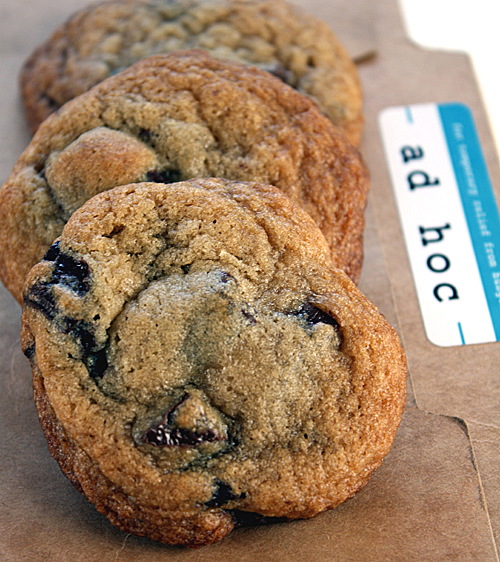
More Sweet Recipes From Thomas Keller: Ad Hoc Chocolate Chip Cookies

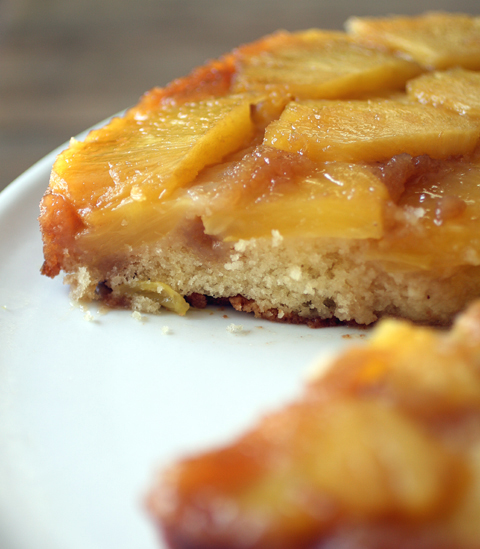
And: Ad Hoc’s Pineapple Upside-Down Cake
Print This Post


23 comments

  • They look amazing and I bet they taste even better than they look!
    Cheers,
    Rosa
  • On the egg issue, TK always makes a point to use his finger to scrape out every last bit of the egg white that clings to the inside of the shell. Wonder if that’s the difference in weights?
  • I love their donuts. I wonder if they have that recipe too? 😉
  • Although we still do a lot of volume measuring, measuring by weight makes so much more sense. Once you get the hang of it, it’s loads easier. Anyway, great looking muffins! Blueberry is definitely my favorite flavor. And the book sounds quite nicely – thanks for the info.
  • Oh these look so delicious. We love blueberry muffins and this looks like such an awesome recipe. That cookie on the front of the book doesn’t look to bad either!!
  • Harvey Steiman: Ahh, I should have figured that Chef Keller would do that when few of us would even think to do it. I bet that does explain the discrepancy in the weights.
    Tami: Yes, I believe the donuts are included in the book.
    Alicia: The cookie on the cover is the famous Nutter Butter at Bouchon Bakery. I can never resist getting one when I visit Yountville. The recipe is a little involved, but I hope to try my hand at it in the near future.
  • i love a big muffin, the bigger, the better! the streusel seals the deal for me–these muffins are fantastic.
  • Waw! Famous blueberry muffins & I love that streusel topping too! A must make! MMMM!
  • Uhh what is 3.4 ounces (96 grams) unsalted butter at room temperature in cups measurement?
  • LC: A stick of butter is 4 ounces, so 3.4 ounces is just shy of that. Probably a little less than a tablespoon short of a stick.
  • Hi,
    I am glad to have found your blog! I’m in the process of making the carrot muffins and am wondering about the oat streusel topping recipe. It calls for 107 grams of oats, plus 106 grams of wheat germ, but the actual volume quantities for both respectively are different by about one cup (it calls for 1/4 cup + 3.5 TBL wheat germ.) I always weigh my ingredients, but when weighing the wheat germ, 1/4 cup is only about 25 grams (give or take.) I would love it if you could look at the recipe and tell me what you think! I was going to make these for breakfast today but I don’t want to use 106 g wheat germ if I shouldn’t. Thanks for your advice!
  • I just got the Bouchon Bakery cookbook as a Christmas gift, and it’s a joy. Beautiful to look at, a pleasure to read.
    I just attempted the Blueberry Muffins (they’re in the oven right now!), but was a bit perplexed about the batter. It was very thick when I finished it, out of the stand mixer. And then after removing it from the fridge this morning, it’s practically a paste – even after letting it sit out for awhile to warm up. Working the blueberries into the batter was difficult, and I was basically pressing chunks of paste into the cupcake papers, rather than spooning or pouring it in like you would a liquid batter. Any thoughts here? What was the consistency of the batter like for you from the mixer and the next day from the fridge??
    Thanks!
  • Marc: My batter was not that thick. Definitely be sure to whip the butter and sugar very well so that it’s quite light, creamy and yes, almost mayonnaise-like in consistency. Your fridge might be on the cold side, too, which made the batter stiffen. But muffins are pretty forgiving as long as you don’t overmix them, so I’m sure they’ll still turn out great when you bake them.
  • Pingback: Marvellous muffins | Womens Health
  • Pingback: How to make the perfect blueberry muffins | Nur, was da steht
  • I’ve been planning to get his book but haven’t gotten around to it yet. These muffins though and the upside down cake look wonderful.
    You do know just about every time I read one of your posts I buy a book. I hope you work on commission! : )
  • Vicki: LOL Nope, no real commission. But I do get a piddly amount if you order the book or anything else through my Amazon portal. And emphasis on “piddly.” 😉
  • Pingback: bon appétit | chuck and welly
  • Pingback: Das Brooklyn » Blog Archive » Frühstücks-Blaubeerkuchen
  • Pingback: Das Brooklyn » Blog Archive » Blueberry Breakfast Cake
  • Pingback: Bingeing on Rhubarb | woodandgrass
  • Josephine Mullane
    This isn’t a comment rather a question. I want to receive your newsletter and inserted my email address, first and last names, and clicked on SUBSCRIBE. But nothing happened. Has this happened before. Help please.
  • Hi Josephine: Sorry for that hiccup in the subscriber system. I added you. Thanks for wanting to get FoodGal regularly.

Leave a Reply 
Your email address will not be published. Required fields are marked *


WORLD PEACE COOKIES

World Peace Cookies
A word on mixing, log rolling and patience: This dough can be different from batch to batch — it always seems to turn out well no matter what, but the inconsistency can be frustrating. I’ve found that it’s best to mix the dough for as long as it takes to get big, moist curds that hold together when pressed and then knead if necessary so it comes together. When you’re rolling it into logs, keep checking that the logs are solid. Again, the dough can be capricious and it may not always roll into a compact log on the first (or second or third) try. Be patient.
Makes about 36 cookies
1 1/4 cups (170 grams) all-purpose flour
1/3 cup (28 grams) unsweetened cocoa powder
1/2 teaspoon baking soda
1 stick plus 3 tablespoons (11 tablespoons; 5 1/2 ounces; 155 grams) unsalted butter, cut into chunks, at room temperature
2/3 cup (134 grams) packed light brown sugar
1/4 cup (50 grams) sugar
1/2 teaspoon fleur de sel or 1/4 teaspoon fine sea salt
1 teaspoon pure vanilla extract
5 ounces (142 grams) best-quality bittersweet chocolate, chopped into irregular sized bits
Sift the flour, cocoa and baking soda together.
Working with a stand mixer fitted with the paddle attachment, or in a large bowl with a hand mixer, beat the butter and both sugars together on medium speed until soft, creamy and homogenous, about 3 minutes. Beat in the salt and vanilla. Turn off the mixer, add all the dry ingredients and pulse a few times to start the blending. When the risk of flying flour has passed, turn the mixer to low and beat until the dough forms big, moist curds. Toss in the chocolate pieces and mix to incorporate. This is an unpredictable dough (see above). Sometimes it’s crumbly and sometimes it comes together and cleans the sides of the bowl. Happily, no matter what, the cookies are always great.
Turn the dough out onto a work surface and gather it together, kneading it if necessary to bring it together. Divide the dough in half. Shape the dough into logs that are 11/2 inches in diameter. Don’t worry about the length — get the diameter right, and the length will follow. (If you get a hollow in the logs, just start over.) Wrap the logs in plastic wrap and freeze them for at least 2 hours or refrigerate them for at least 3 hours.
When you’re ready to bake: Center a rack in the oven and preheat it to 325 degrees F. Line two baking sheets with parchment paper or silicone baking mats.
Working with one log at a time and using a long, sharp knife, slice the dough into 1/2-inch-thick rounds. (The rounds might crack as you’re cutting them — don’t be concerned, just squeeze the bits back onto each cookie.) Arrange the rounds on the baking sheets, leaving about 2 inches between them. (If you’ve cut both logs, keep one baking sheet in the fridge while you bake the other.)
Bake the cookies for 12 minutes — don’t open the oven, just let them bake. When the timer rings, they won’t look done, nor will they be firm, and that’s just the way they should be. Transfer the baking sheet to a cooling rack and let the cookies rest until they are only just warm, at which point you can munch them, or let them reach room temperature (I think the texture’s more interesting at room temperature).
Bake the remaining dough.
STORING The dough can be refrigerated for up to 3 days or frozen for up to 2 months. If you’ve frozen the dough, you needn’t defrost it before baking — just bake the cookies 1 minute long.
PLAYING AROUND Rolled-and-Cut World Peace Cookies. WPC dough has a mind of its own and it’s hard to corral it into perfect rounds no matter how you handle it. If you’re on a quest for a neater, rounder cookie, roll the dough to a thickness of 3/8 inch and refrigerate or freeze as you would for logs. If you have 2-inch baking rings, use a cookie cutter that’s slightly smaller than 2 inches, cut out rounds and center the rounds in the baking rings. (Muffin tins won’t work for these cookies.) Alternatively, you can cut out the dough and bake it on lined cookie sheets — it’s how we made the beautiful cookie in the photograph. The baking time remains the same no matter how you cut the cookies.

FINANCIERS

Financiers
March 29, 20114:33 PM ET

This recipe is adapted from From Around My French Table by Dorie Greenspan (Houghton Mifflin Harcourt 2010). I didn't have the special little ingot-shaped rectangular molds that give these little Parisian cakes their distinctive shape, but Greenspan says mini-muffin molds will do. And so they did. I made some in a silicone tin and some in a regular nonstick aluminum pan. The metal one was preferable, giving the little cakes crisp gilded edges that contrast delectably with the moist, almondy interior.

Enlarge this image

T. Susan Chang for NPR
I never buy almond flour, but I always have whole raw almonds in the freezer. You can't process raw almonds finely if they're at room temperature and you grind them by themselves — they turn to almond butter before becoming finely ground. But if you put them in the food processor frozen, and add the sugar or flour from the recipe, you can achieve a very fine grind. In this recipe, I simply grind them directly with the sugar.

Makes 18 to 20

12 tablespoons (1 1/2 sticks) unsalted butter
1 cup sugar
1 cup almond flour
6 large egg whites
2/3 cup all-purpose flour
Financiers can be made with "normal" melted butter, but if you follow tradition and brown the butter, you'll give the cakes an extra layer of flavor. To make beurre noisette ("hazelnut" butter, so called for the scent of hazelnuts the browned butter produces), cut the butter into pieces, toss it into a small saucepan and bring it to a gentle boil over medium heat. Once the butter boils, keep a close eye on it — you want it to turn a golden brown. If you get a deeper color you'll get more flavor, but you have to be careful not to let the butter go black — something that can happen quickly. When you have the color you want (and perhaps the fragrance of hazelnuts), pull the pan from the heat and set it aside in a warm place.
Put the sugar and almond flour in a medium saucepan and stir to mix. Add the egg whites, stir, and place the pan over low heat. Again, never leaving the pan unattended, stir with a wooden spoon or silicone spatula for about 2 minutes, until the mixture is slightly white, runny and hot to the touch. Remove the pan from the heat and stir in the all-purpose flour, then gradually blend in the melted butter. Scrape the batter into a heatproof bowl and press a piece of plastic wrap against the surface of the batter. Chill the batter for at least 1 hour, or, better yet, overnight. (You can keep the batter in the fridge for up to 30 days).
When you're ready to bake, center a rack in the oven and preheat the oven to 400 degrees. Generously butter 18 mini-muffin molds, dust with flour and tap out the excess. Place the molds on a baking sheet.
Fill each mold almost to the top. Bake the financiers for about 15 minutes. The cakes should be golden, springy to the touch and easy to pull away from the sides of the pan. Unmold the cakes as soon as you remove the pans from the oven. If necessary, run a blunt knife around the edges of the cakes to help ease them out of the pans. Transfer the cakes to a cooling rack and allow them to cool to room temperature.